




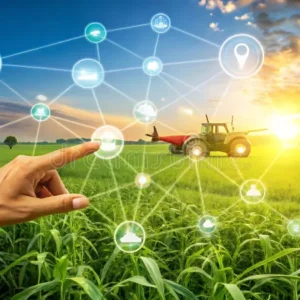
Agriculture has always been the backbone of human civilization. Today, modern technology is reshaping traditional farming methods, making agriculture more efficient, productive, and sustainable. From smart sensors to artificial intelligence, agricultural technology (AgriTech) is helping farmers grow more food with fewer resources while protecting the environment.
Agricultural Technology.
Agricultural technology refers to the use of modern tools, machines, software, and scientific methods to improve farming practices. It includes everything from automated tractors and drones to data analytics and biotechnology. The main goal is to increase crop yields, reduce costs, and ensure food security for a growing global population.
Precision Farming.
Precision agriculture is one of the most important innovations in modern farming. It uses GPS, sensors, and data analytics to monitor soil conditions, crop health, and weather patterns. Farmers can apply water, fertilizer, and pesticides only where needed, reducing waste and improving productivity.
Key benefits of precision farming include:
- Higher crop yields
- Lower production costs
- Reduced environmental impact
- Better decision-making through real-time data
Smart Irrigation Systems.
Water management is a major challenge in agriculture. Smart irrigation systems use soil moisture sensors and automated controls to deliver the right amount of water at the right time. This technology prevents overwatering, conserves water, and promotes healthier crops.
These systems are especially valuable in regions facing water shortages, helping farmers maximize output while saving precious resources.
Drones and Remote Sensing.
Drones are becoming powerful tools in agriculture. They provide aerial images and videos that help farmers monitor large fields quickly. Drones can detect pest infestations, nutrient deficiencies, and plant diseases early, allowing timely action.
Remote sensing technology also helps in:
- Crop mapping
- Yield estimation
- Field analysis
- Disaster assessment
Artificial Intelligence and Machine Learning.
Artificial intelligence (AI) is transforming agriculture by analyzing massive amounts of data to predict crop performance, identify diseases, and optimize planting schedules. Machine learning models help farmers make smarter decisions based on weather patterns, soil quality, and market demand.
AI-powered systems are also used in robotic harvesting, weed detection, and automated spraying, reducing labor costs and increasing efficiency.
Biotechnology and Improved Seeds.
Biotechnology plays a crucial role in developing high-yield, disease-resistant, and climate-tolerant crops. Genetically improved seeds help farmers grow more food on less land while reducing dependence on chemical pesticides.
This technology supports sustainable agriculture by improving food quality and ensuring stable harvests even in challenging climates.
Farm Management Software.
Digital platforms and farm management apps allow farmers to track expenses, monitor crops, manage inventory, and plan harvests. These tools provide clear insights into farm operations, helping improve profitability and long-term planning.
With cloud-based systems, farmers can access data anytime and anywhere, making agriculture more connected than ever.
Benefits of Technology in Agriculture.
Modern agricultural technology offers many advantages:
- Increased food production
- Reduced labor requirements
- Better resource management
- Enhanced sustainability
- Improved farmer income
- Stronger food security
By combining innovation with traditional knowledge, farmers can build resilient agricultural systems for future generations.
The Future of Agriculture.
The future of farming lies in smart agriculture, where technology and nature work together. Innovations such as vertical farming, blockchain for supply chains, and fully autonomous farms are already emerging. As technology continues to evolve, agriculture will become more efficient, environmentally friendly, and globally connected.
Technology in agriculture is not just about machines—it is about creating a smarter, greener, and more sustainable world.