


Artificial Intelligence (AI) is revolutionizing every aspect of our lives — and education is no exception. From smart classrooms to personalized learning experiences, AI has become a powerful tool that is reshaping how students learn and teachers teach.
In this article, we’ll explore how AI is changing the education system, its benefits, challenges, and the exciting future it promises for learners around the world.
AI in Education.
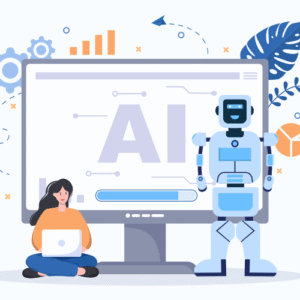
AI in Education refers to the use of artificial intelligence technologies — like machine learning, chatbots, and data analytics — to improve teaching, learning, and academic management.
It allows educators to create personalized, data-driven, and efficient learning systems that help students reach their full potential.
Some common examples include:
- AI tutors and chatbots
- Adaptive learning software
- Smart grading systems
- Data-driven performance tracking
Top Ways AI Is Transforming Education.
Personalized Learning.
AI analyzes student data and learning behavior to create customized study plans.
For example, if a student struggles with math but excels in science, the AI adjusts lessons accordingly — helping each learner progress at their own pace.
Smart Teaching Assistants.
Virtual AI assistants help teachers with grading, attendance tracking, and even lesson planning.
This reduces workload and allows educators to focus more on creativity and student engagement.
Automated Grading Systems.
AI tools can automatically grade tests, essays, and assignments — providing instant feedback.
This not only saves time but ensures accuracy and fairness in assessments.
AI-Powered Chatbots for Student Support
Many universities and schools now use chatbots to answer student queries 24/7 — about admissions, schedules, or even homework help.
It’s like having a personal assistant that never sleeps.
Bridging the Language Gap.
AI-powered translation tools like Google Translate and Duolingo’s AI assistant help break language barriers, allowing students from different countries to learn together.
Predictive Analytics in Education.
AI can predict which students are at risk of failing or dropping out — allowing teachers to provide early intervention and support.
This helps improve academic success rates and reduce stress among learners.
Virtual Classrooms & Smart Content.
AI enables interactive and immersive learning environments through AR (Augmented Reality) and VR (Virtual Reality).
Imagine studying history by walking virtually through ancient Rome or learning biology by exploring the human body in 3D.
Benefits of Using AI in Education.
✅ Personalized Learning Experience – Every student learns differently; AI adapts to their needs.
✅ 24/7 Availability – Students can learn anytime, anywhere.
✅ Data-Driven Insights – AI helps track performance and identify learning gaps.
✅ Improved Accessibility – Disabled students benefit from speech-to-text and visual learning tools.
✅ Time Efficiency – Teachers can focus more on mentoring than administrative tasks.
Challenges of AI in Education.
While AI brings innovation, it also raises some challenges:
Data Privacy Concerns – Student data needs strong protection from misuse.
Overdependence on Technology – Students must still learn human interaction and critical thinking.
High Implementation Cost – AI tools and smart classrooms require investment.
Teacher Training Gap – Educators must learn how to effectively use AI technologies.
The Future of AI in Education (2025 and Beyond).
The next few years will see AI-integrated schools and universities becoming the norm.
Some key trends include:
- AI tutors guiding students individually
- Fully digital classrooms with VR integration
- Real-time emotion detection to measure student engagement
- Global online campuses powered by AI collaboration tools
By 2030, experts predict AI could become an essential part of education policy, curriculum design, and student success tracking worldwide.