
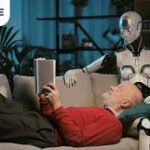


Artificial Intelligence has evolved faster than anyone expected, and one of the most revolutionary innovations is the rise of AI Personal Assistants 2.0. These advanced digital helpers are no longer simple voice-command tools. Instead, they are turning into intelligent companions capable of understanding emotions, managing complex tasks, and improving our daily lives like never before.
In this article, we explore what makes AI Personal Assistants 2.0 unique, how they work, and why they are becoming essential in every home and business.
AI Personal Assistant 2.0.
AI Personal Assistant 2.0 is the next-generation version of digital assistants like Siri, Google Assistant, and Alexa — but far more powerful.
These assistants use:
- Advanced Machine Learning
- Natural Language Understanding (NLU)
- Emotional Intelligence (EI)
- Context Awareness
- Real-time Decision Making
They don’t just follow instructions; they learn from behavior, understand mood, and adjust responses like a human helper.
Key Features of AI Personal Assistants 2.0.
Emotional Understanding (EQ-Based Responses)
These assistants can detect your mood from your voice tone, facial expressions, or typing style.
If you sound tired or stressed, the assistant may:
- Offer a break
- Suggest calming music
- Organize your tasks to reduce workload
Natural & Deep Conversation
You can talk to the assistant like a real person.
Example:
“I’m feeling overwhelmed today.”
It understands the context and replies empathetically.
Smart Task Automation
AI 2.0 can fully manage:
- Emails
- Schedules
- Reminders
- Travel plans
- Shopping lists
- Bills & payments
- Project deadlines
It learns your daily habits and makes decisions automatically.
Multi-Device Brain Sync
Whether you use a phone, laptop, smartwatch, car system, or smart home device — AI 2.0 remembers everything and continues tasks smoothly across all platforms.
Voice + Visual Control
You can control your assistant through:
- Voice commands
- Gestures
- Eye tracking
- Holographic screens
- AR/VR headsets
This makes it perfect for home, office, and remote work.
Hyper-Personalization
AI learns your:
- Preferences
- Routine
- Behavior
- Interactions
It becomes a personalized digital partner that predicts your needs before you say them.
AI Personal Assistants 2.0 Work.
These assistants use advanced algorithms and massive real-time data processing.
The process includes:
- Input Detection – Voice, text, gesture, or expression
- Emotion & Context Analysis – Understanding mood & situation
- Knowledge Search – Accessing cloud databases and memory
- Decision Making – Choosing the best action
- Response Execution – Speaking, messaging, or performing tasks
This makes them smarter, faster, and more reliable than older versions.
Real-Life Uses of AI Assistants 2.0.
Home Automation
- Adjust lights, temperature, and security
- Build grocery lists
- Monitor daily routines
Work Management
- Set meetings
- Reply to emails
- Write reports
- Analyze data
- Give performance suggestions
Health & Fitness
- Track sleep
- Monitor stress levels
- Give diet plans
- Offer exercise reminders
Education
- Explain concepts
- Solve homework questions
- Provide learning schedules
Travel
- Book flights
- Create itineraries
- Suggest destinations
- Track weather and traffic
AI Personal Assistants 2.0 Matter for the Future.
AI 2.0 will reshape how humans interact with technology.
Benefits include:
- More productivity
- Better mental well-being
- Reduced workload
- Smarter decisions
- Faster communication
- Personalized experiences
They act like digital companions, improving both personal and professional life.
Future Possibilities.
In the next few years, AI Personal Assistants may develop:
- Full hologram body projections
- Brain-signal (mind-control) commands
- Deeper emotional bonding
- Real-time translation for any language
- Complete home and office automation
The world is heading toward an era where AI assistants will feel almost human.